
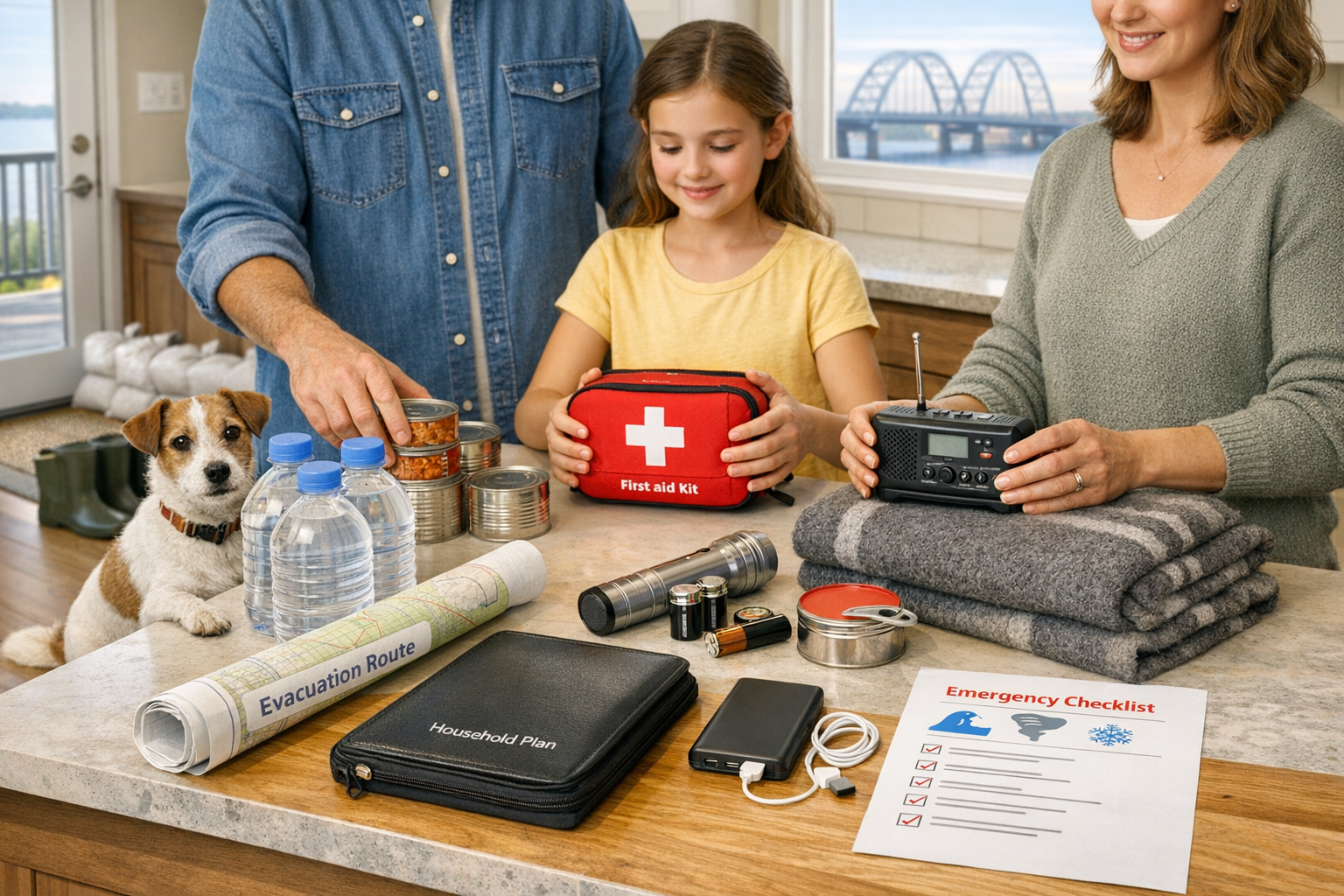
Living in the Quad Cities - Davenport, Bettendorf, Moline, and Rock Island - means facing risks like flooding, tornadoes, and winter storms. Preparing ahead is the best way to protect your family and property. Here's a quick overview of what you need:
- Emergency Kit: Stock 3–5 days of water (1 gallon/person/day), non-perishable food, first-aid supplies, flashlights, batteries, and tools.
- Home Prep: Seal foundation cracks, install sump pumps, elevate utilities, and reinforce garage doors and windows.
- Family Plan: Practice evacuation routes, designate meeting spots, and set up an emergency contact outside the area.
- Pet Safety: Pack food, water, and medical records for pets. Plan for pet-friendly shelters.
- Flood Insurance: Standard policies don’t cover floods. Consider an NFIP policy with a 30-day waiting period.
- Stay Informed: Sign up for local alerts like Alert Iowa and check FEMA flood maps for your home’s risk level.
Taking these steps now can help you respond effectively when a disaster strikes.
Emergency Preparedness: Essentials of an Emergency Kit
Emergency Supply Kit Essentials
@figure 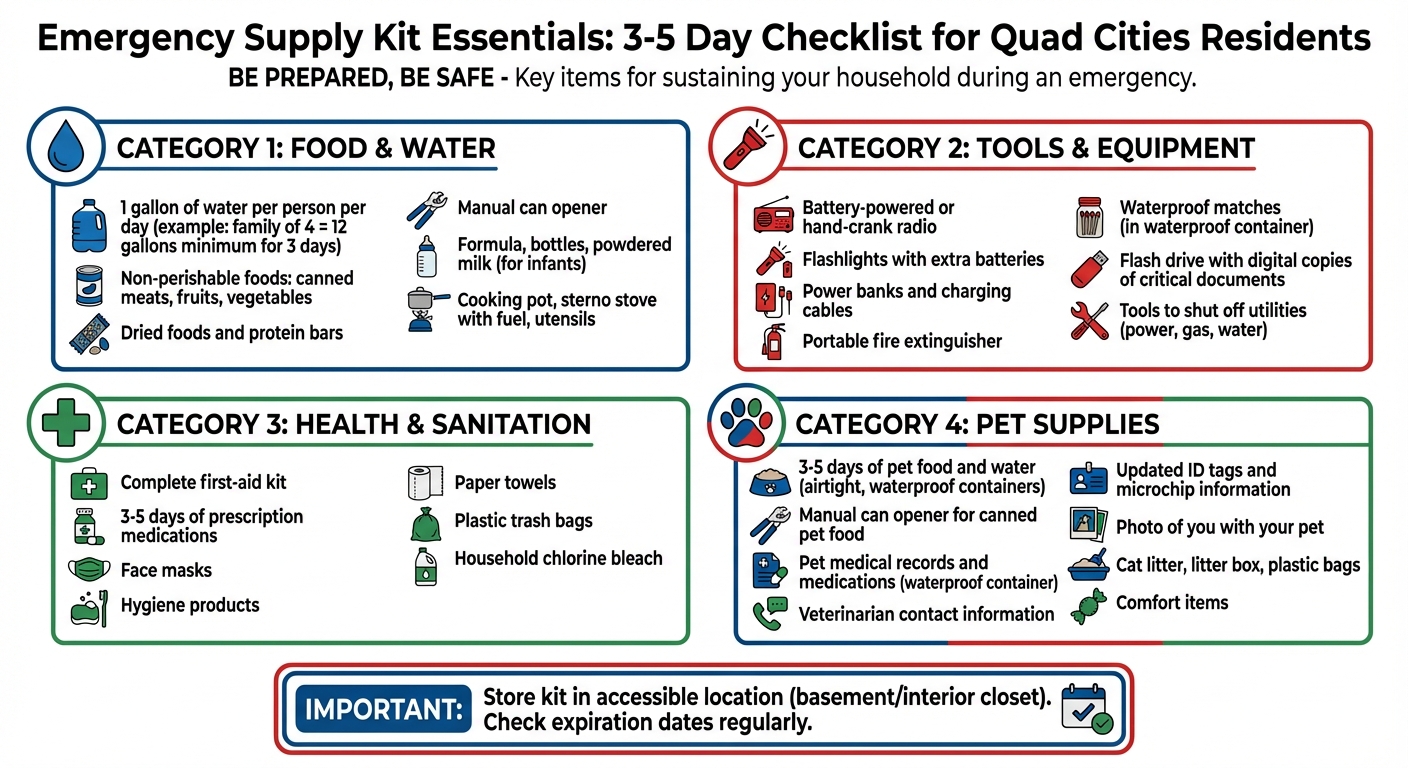 {Essential Emergency Kit Supplies for 3-5 Days}
When preparing for emergencies, it's crucial to have a supply kit stocked with enough essentials to last 3–5 days. This timeframe is based on the typical disruptions caused by events like floods or severe storms while exploring adventures in the Quad Cities. The Iowa Department of Homeland Security and Emergency Management emphasizes that assembling a family emergency kit is a straightforward task.
Store your kit in an easy-to-access spot, such as a basement or interior closet. Check expiration dates regularly and replace items as needed to keep everything fresh and usable. This kit will serve as your lifeline when disaster strikes.
Food and Water Supplies
Water should be your top priority. Plan for at least one gallon per person per day. For instance, a family of four would need a minimum of 12 gallons for a three-day emergency, with extra supplies if preparing for a longer period. Stick to non-perishable foods like canned meats, fruits, vegetables, dried foods, and protein bars. Don’t forget a manual can opener. Families with infants should include formula, bottles, and powdered milk, while those with special dietary needs should adjust accordingly. Cooking essentials like a pot, a sterno stove with fuel, and basic utensils are also important.
Emergency Tools and Equipment
Equip your kit with a battery-powered or hand-crank radio and flashlights, along with extra batteries, to stay informed and navigate during power outages. Include power banks and charging cables to keep phones functional for emergency communication. A portable fire extinguisher and waterproof matches (stored in a waterproof container) are essential for fire safety. Protect critical documents - such as insurance policies and IDs - by saving digital copies on a flash drive. Additionally, have tools on hand to manually shut off utilities like power, gas, and water to prevent secondary hazards.
Health and Sanitation Supplies
A complete first-aid kit is a must, along with 3–5 days of prescription medications for each family member. Include hygiene products, face masks, and sanitation items. For cleaning and disinfecting, pack paper towels, plastic trash bags, and household chlorine bleach.
Pet Supplies
Don’t forget your pets! They’ll need 3–5 days’ worth of food and water stored in airtight, waterproof containers. If you’re using canned pet food, bring a manual can opener.
The American Red Cross advises, "If it's not safe for you to stay in your home during an emergency, it's not safe for them either!"
Keep pet medical records, medications, and your veterinarian’s contact information in a waterproof container. Ensure pets have updated ID tags and microchips. A photo of you with your pet can help prove ownership if you’re separated. Pack sanitation supplies like cat litter, litter boxes, and plastic bags, as well as comfort items for your pet. Keep in mind that most public shelters won’t accept pets, except for service animals, so planning ahead is essential.
Securing and Preparing Your Home
The Quad Cities are no strangers to flooding and storms. Events like the Great Flood of 1993 caused massive damage - $2.7 billion worth - and impacted 21,000 homes in Iowa alone. To protect your property, you need a mix of physical defenses and careful planning. Let’s focus on what you can do to prepare for flooding and severe weather.
Flood Protection Measures
Since standard homeowners' insurance doesn’t cover flood damage, getting a separate NFIP flood policy is essential. Keep in mind, though, there’s typically a 30-day waiting period before coverage kicks in.
"The smartest way to protect your property from flood damage is to buy flood insurance." – FEMA
Start by checking FEMA's Flood Map Service Center to see if your home is in a high-risk zone. If you live in Scott or Rock Island counties, River Action offers free first-floor elevation surveys, which usually cost between $200 and $2,000. Call them at 322-2969 to learn more.
For physical protection, seal any cracks in your foundation using mortar caulk, and install a backflow valve to prevent sewage from backing up into your home. A sump pump with a battery backup is another must-have, especially for power outages during storms. Move valuables to higher floors and raise critical utilities - like HVAC systems and water heaters - above potential flood levels. You can also grade your yard with clay-based fill dirt to direct water away from your home and keep gutters clear of debris.
Structural Reinforcements
Did you know that garage door failure accounts for over 90% of wind-related home damage? Before storm season, hire a professional to reinforce your garage door - it’s a small investment that can make a big difference.
For your windows, consider permanent storm shutters or keep pre-cut 5/8-inch plywood panels handy for quick installation. Regularly trim trees and shrubs to minimize the risk of windblown debris, and secure outdoor items like furniture and grills with bungee cords or store them indoors when severe weather is on the horizon.
Utility and Insurance Preparations
Once your home is physically secured, turn your attention to utilities and insurance.
Make sure you know where the main shut-off valves for gas, water, and electricity are located, and label them clearly. Everyone in your household should know how to use them. If you evacuate, shut off the gas supply - but leave the restoration to a qualified professional. Also, unplug electronics and appliances to prevent electrical damage in case of flooding.
Take the time to document your belongings with photos and videos, which can streamline the insurance claims process later. Store physical copies of important documents like insurance policies and IDs in waterproof containers. It’s also a good idea to back them up digitally with password protection. Finally, sign up for local emergency alerts - like Alert Iowa for Scott County - to stay informed about severe weather in real-time.
Creating a Family Emergency Plan
Once your home is secure, the next step is preparing your family for quick and effective action during an emergency. A well-thought-out family emergency plan ensures everyone knows their role, reducing confusion and helping to keep everyone safe. This includes planning evacuation routes and organizing emergency contacts to ensure a smooth response when it matters most.
Establishing Evacuation Routes
Plan multiple evacuation routes from your home and the Quad Cities. Relying solely on primary roads can be risky, as they may become congested or unusable during floods or severe storms. It's a good idea to test these routes ahead of time to identify any potential issues.
Choose two meeting spots for your family: one right outside your home for immediate emergencies, like a fire, and another outside your neighborhood for situations where returning home isn't possible. If you have pets, plan for their needs too - look into pet-friendly hotels or kennels along your routes, and make sure their vaccination records are up to date.
For residents of Scott County, signing up for Alert Iowa can provide real-time updates on evacuation instructions and shelter locations. Keep a copy of evacuation maps both digitally and in your vehicle to ensure you’re prepared, even if technology fails.
Setting Communication Protocols
Disasters often overwhelm local phone networks, making communication tricky. To counter this, designate an out-of-area contact for your family. Long-distance calls and texts are often more reliable than local ones during emergencies.
"Learn multiple routes out of your neighborhood. Contact, follow, or sign up for alerts from your local emergency management agency to receive important evacuation information, the location of shelters and hospitals, and recommended evacuation routes." - Ready Iowa
Make sure everyone in your family has a printed list of emergency contacts and save these numbers on mobile devices as well. Update schools, daycare centers, and workplaces with your emergency contact information and communication plan. Texting should always be your first choice during emergencies - it’s more reliable than calls and helps keep phone lines open for first responders.
Practicing Drills and Preparedness
Knowing your emergency plan isn’t enough - you need to practice it regularly. Conduct evacuation drills at least twice a year. During these drills, grab your emergency kit and drive your planned evacuation routes to simulate a real-life scenario.
"Practice evacuating your home twice a year. Grab your emergency kit, just like you will in a real emergency, then drive your planned evacuation route." - American Red Cross
Don’t forget to include important procedures like shutting off utilities during your drills. If you have family members who are away at college or on military deployment, adjust your plan to account for their presence or absence. Revisit your plan periodically, especially if your household’s needs change. For instance, consider any new requirements for elderly family members or those relying on life-sustaining equipment like respirators.
During and After a Disaster
When disaster strikes, what you do in the moment and shortly after can make a huge difference in keeping your family safe and minimizing damage to your property. Acting quickly and knowing the steps to take after the event can help you recover more smoothly.
Immediate Safety Measures
If authorities issue an evacuation order, leave immediately and stick to the recommended routes. Avoid shortcuts - they could be blocked or unsafe. If you encounter rising water, move to higher ground or the safest elevated area you can find, but stay away from closed attics. Even just 6 inches of moving water can knock you over, and a foot of water can sweep away vehicles, including SUVs.
For tornadoes or strong winds, take shelter in a basement, cellar, or an interior room without windows on the lowest floor. During an earthquake, use the "Drop, Cover, and Hold On" method: get under sturdy furniture and stay there until the shaking stops. Don’t stand in doorways or run outside. If you need to evacuate, shut off the main gas and water supplies if instructed to do so. Always rely on a professional to restore gas service later.
Never attempt to drive through flooded roads or go around barriers. If your car stalls in water, leave it immediately and head to higher ground. Before a storm, fully charge your phone and any backup batteries, and switch to low-power mode to save energy for emergency calls.
Once the immediate danger has passed, carefully inspect your home for damage.
Post-Event Safety Inspections
Only return to your home when authorities confirm it’s safe. When you do, wear sturdy boots, long pants, and gloves to protect yourself from debris. Use a battery-powered flashlight to inspect dark areas, as open flames or candles could ignite gas leaks.
Check for visible damage like cracks, a shifted foundation, or roof issues. If you suspect any gas, water, or electrical line damage, turn off the utilities using the proper tools. Look for broken gas lines or submerged furnaces before turning anything back on. If you’re uncertain about your home’s structural safety, reach out to organizations like the American Red Cross or Scott County Emergency Management for help with assessments.
Take photos or videos of all damage before starting any cleanup - this documentation is essential for insurance claims. Inspect your food and water supplies carefully. Discard anything, including canned goods, that came into contact with floodwater, as it may be contaminated. Floodwaters can carry harmful bacteria, sewage, and even industrial chemicals.
Once everything is documented and you’ve ensured it’s safe, you can begin the cleanup process.
Cleanup Process
Start cleaning only after authorities give the "All Clear" and you’ve finished documenting the damage. Aim to dry out your home within 24 to 48 hours to avoid mold growth, which can start quickly on materials like wood, drywall, and furniture. Open windows and doors and use fans to circulate fresh air outside.
Wear the right protective gear while cleaning: hard hats, goggles, N95 masks (or better), heavy gloves, and waterproof steel-toe boots. If sewage is involved, add rubber boots, gloves, and goggles to your gear. Work in teams if possible, take frequent breaks, and stay hydrated while removing debris.
If your basement is flooded, pump out the water slowly - about one-third of the total volume per day - to avoid putting too much pressure on the walls, which could cause them to collapse. After removing the water, disinfect all surfaces that came into contact with floodwaters using wipes, sprays, or a diluted bleach solution.
| Cleanup Task | Safety Requirement | Timeline |
|---|---|---|
| Drying Out | Open windows, use fans | 24–48 hours |
| Basement Pumping | Gradual removal (1/3 per day) | At least 3 days |
| Debris Removal | Hard hat, gloves, steel-toe boots | As needed |
| Mold Prevention | N95 mask; dry within 24 hours | Immediate |
Local Quad Cities Resources
Having access to local contacts and resources is essential during disasters. These connections not only enhance your disaster preparation but also strengthen community-based support when crises arise. The Quad Cities area is fortunate to have a robust network of agencies, websites, and organizations dedicated to helping residents prepare for, respond to, and recover from emergencies.
These resources are a vital complement to your disaster readiness efforts, offering both guidance and practical assistance.
Emergency Contacts
In any emergency, your first call should be to 911.
Beyond that, several local agencies provide critical support:
- National Weather Service Quad Cities: For weather alerts and hazard updates, call 563-386-3976.
- Scott County Emergency Management Agency: Located at 1100 E 46th St, Davenport, this agency oversees disaster response coordination and manages the Alert Iowa system, a mass notification tool powered by Smart911.
- Salvation Army Quad Cities Family Services: For emergency shelter and homelessness prevention, reach out at 563-324-4808.
- Community Action of Eastern Iowa: Offers food and diaper assistance. Contact them at 563-324-3236.
- Heart of Hope Ministries: Provides a food pantry and clothing services, including delivery for elderly and disabled residents. Call 309-428-4752.
- American Red Cross (Moline office): For emergency shelter and immediate relief, dial 309-764-2811.
Regional Preparedness Websites
Online resources can also play a key role in disaster planning. Residents in the area can find detailed guides and tools on these platforms:
- beready.iowa.gov: Offers Iowa-specific disaster preparedness resources, including hazard maps, emergency checklists, and tips for creating family communication plans.
- ready.illinois.gov: Provides similar resources tailored for Illinois residents.
These sites are excellent starting points for building emergency kits and refining your disaster response strategies.
Community Support Networks
The Quad Cities region is bolstered by several organizations that focus on disaster response and recovery:
- Disaster Ready Quad Cities (DRQC): A coalition of nonprofits, government agencies, and businesses working together to coordinate preparation, response, and long-term recovery efforts.
- Quad Cities Community Foundation: Through its Disaster Recovery Fund, this foundation supports ongoing relief efforts. As Sue Hafkemeyer, President and CEO, explains, the fund plays a crucial role in helping the community recover. Donations can be made at QCCommunityFoundation.org.
For those looking to get involved, DRQC offers Volunteer Reception Center Training to help organize spontaneous volunteers during emergencies. Other organizations like Habitat for Humanity Quad Cities assist with home repairs for low-income families affected by disasters. Additionally, Grow Quad Cities and the Quad Cities Chamber provide recovery support for local businesses.
Conclusion
Don't wait for the next storm to take action. The Quad Cities has endured repeated challenges, including flooding in 2019, 2023, and July 2025, as well as high winds and tornadoes that have pushed the community to its limits. These recurring crises highlight one crucial lesson: preparation is key to safeguarding your family and property.
Start by putting together a 3–5-day emergency kit, signing up for Alert Iowa, creating and practicing a family communication plan, and reviewing your insurance coverage to ensure it addresses local risks. These steps lay the groundwork for a solid disaster readiness plan.
Local leaders have stressed the importance of resilience and long-term recovery:
"Recovery doesn't happen overnight, in a week, or even months, after a disaster like the one we had." - Kelly Thompson, Vice President of Grantmaking and Community Initiatives, Quad Cities Community Foundation
Think beyond your immediate household. Consider learning CPR or first aid, or attend specialized training events, such as the Volunteer Reception Center Training held by Disaster Ready Quad Cities in November 2025 at the American Red Cross in Moline. Supporting community efforts, like contributing to the Quad Cities Disaster Recovery Fund, can also ensure a stronger, more prepared region.
FAQs
When getting ready for potential flooding in the Quad Cities, it’s essential to have a solid plan and the right supplies. Start by putting together an emergency kit. Include basics like non-perishable food, bottled water, flashlights, extra batteries, and a battery-powered radio. Don’t forget to store important documents in a waterproof container to keep them safe, and make sure your phone is fully charged to stay connected during power outages.
Stay updated by keeping an eye on local weather reports and tracking river levels. If your home is in an area prone to flooding, take proactive steps like placing sandbags around doors and windows to block water from getting in. Move valuables and essential items to higher floors to minimize damage. Also, double-check that your sump pump is working, and if you can, have a backup power source ready to go.
A little preparation now can go a long way in keeping you and your home safe during a flood emergency.
Your pet's safety should be a key part of your emergency plan. Start by locating pet-friendly shelters, boarding facilities, or trusted friends and family members outside your area who can provide a safe place for your pet if you need to evacuate. Don't forget to microchip your pet and ensure your contact information is current - this can make reunification much easier if you get separated.
It's also important to prepare an emergency kit specifically for your pet. Include essentials like food, water, medications, and any comfort items they rely on, such as a favorite toy or blanket. Keep your veterinarian's contact information readily available, and have a backup plan in place. For instance, talk to neighbors or caregivers about helping evacuate your pet if you're not home when disaster strikes.
Taking these steps ahead of time can make a big difference in keeping your pet safe and minimizing stress during an emergency.
Most standard homeowners insurance policies exclude flood damage, which means your property and belongings could be at risk if a flood occurs. To safeguard yourself financially against flood-related losses, you'll need a separate flood insurance policy.
Flood insurance is available through the National Flood Insurance Program (NFIP) or private insurance companies. A good first step is reaching out to your current insurance provider. They can walk you through the options and help you find coverage that fits your situation.